

The output leaves the building. A statement, a policy document or a regulatory notice goes to a customer or a regulator. Once it has gone, the correction is a letter of apology and sometimes a reportable event.
Industry experience
Industry IT Solutions Shaped Around How Your Business Operates
Software engineering for banking and insurance, manufacturing and life sciences, with services shaped around the data, integration and operating realities of each sector.
Industry focus
Why we work in three sectors rather than all of them
Banking, manufacturing and life sciences look different on the surface and share one thing underneath: the software that matters is wired into how the business actually runs, and it cannot simply be switched off and replaced. A statement run that misses its window, a traceability record that cannot be reconstructed, a validated system that has fallen out of its qualified state — each is an operational problem before it is a technical one.
That is why we work in a small number of sectors and stay in them. The data models, integration patterns, regulatory expectations and failure modes differ enough that general-purpose engineering produces the wrong answer confidently. A team that has never run a nightly statement cycle will design one that works until the month-end peak. A team that has never been through an audit will build a system that is correct and cannot prove it.
Operating reality
What is different about software in a regulated or operational environment?
Most enterprise software can be corrected after the fact. A wrong number in a report gets fixed and reissued. The systems in these three sectors mostly cannot work that way, for three reasons.
The record has to survive. A traceability record may be read five years later during a recall investigation. An audit trail may be examined by an inspector who was not born when the system was designed. Data that is merely present is not enough; it has to be attributable, readable and intact.
The window is fixed. Batch cycles, production shifts and cut-off times do not move because a deployment ran long. Release engineering in these environments is planned around the operating calendar rather than the other way round.
Connected capabilities
What we do across all three sectors
Custom application development
Applications built around a specific workflow, its data rules and the systems it has to talk to
Enterprise integration
Interfaces to ERP, CRM, core systems, MES, LIMS, QMS and legacy platforms, designed before build rather than during it
Customer communications
High-volume document and message generation across print, email, SMS, digital and archive channels
Legacy modernisation
Staged replacement around a live system, rather than a rewrite and a cutover date
Application support
Incident resolution, enhancement releases and upgrades under agreed response targets
Regulated systems
Validation and qualification of computerised systems for GxP environments
Decision framework
How do you decide whether to build, configure or leave a system alone?
The first two to three weeks of any engagement are discovery and gap analysis, and the deliverable is a gap register that states, area by area, whether the answer is build, configure or leave alone. It is written before any build commitment and it is yours whether or not the engagement continues.
The recommendation is often to buy. If a mature product already fits the process, configuring it will cost less and last longer than building an alternative. Custom software earns its place when the process is genuinely different, when several systems have to be integrated, when packaged products force workarounds that cost more than they save, or when the business needs long-term control over how the application evolves.
Industry solutions
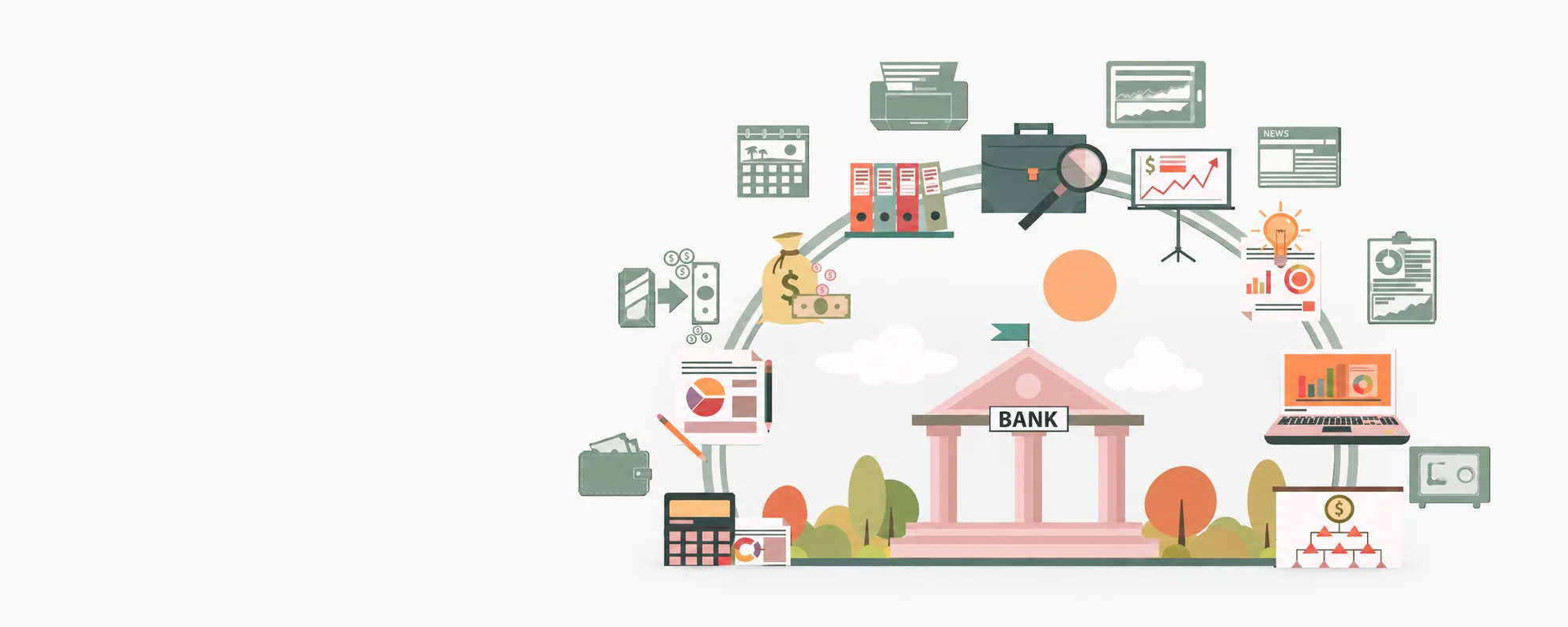
Banking, finance and insurance
Customer communications at volume, digital journeys built around core systems rather than replacing them, and long-term support for applications that cannot go down. Clients include RBL Bank, HDFC Life, Utica National Insurance Group and MedPro.
Explore BFSI
Manufacturing
Traceability and unit genealogy, station-level data capture, statistical process control and barcode workflows, connected to the PLC, SCADA, MES and ERP systems already running the plant. Clients include Exide Industries, Luminous, TVS Electronics and FANUC India.
Explore manufacturing
Life sciences and pharma
Applications that connect laboratory, quality, manufacturing and supply-chain workflows, built to hold up under GxP expectations. Clients include Alembic, Sai Life Sciences, Navitas Life Sciences, Syngene and NCBS.
Explore life sciencesFAQ
Questions about AdventSys industry technology solutions
Why choose AdventSys for industry IT solutions?
AdventSys combines software engineering with experience in the operating patterns of banking and insurance, manufacturing and life sciences. That context helps the team ask better questions about data, integrations, reliability and user workflows before deciding how a solution should be designed or modernized.
How does AdventSys tailor software to different industries?
We start with the systems and operating constraints that are specific to the sector. In BFSI that may be customer communications and portals; in manufacturing, genealogy, SPC and shop-floor data; in life sciences, laboratory, research, manufacturing and enterprise-system integration. The technology approach follows those boundaries rather than applying one template to every industry.
What are the benefits of industry-specific software engineering?
Industry context reduces the amount of discovery spent relearning basic operating realities and helps surface integration and reliability risks earlier. It does not replace technical engineering, but it makes architecture, workflow and support decisions more relevant to the environment where the software will actually run.