
Jenkins, Ansible, Zabbix, SonarQube — running in production, including in client environments

DevOps Consulting & CI/CD Automation Services

We shorten the path from commit to production by removing manual release steps, putting monitoring and alerting in place before an outage needs them, and adding automated code quality gates to the pipeline. We work with open-source tooling, on your infrastructure or ours.

DevOps development and operations workflow

Software delivery

We make the release path repeatable, then automate it

We start where delivery is losing time or reliability — manual builds, inconsistent environments, fragile tests, deployment handoffs or poor production visibility — making those steps repeatable first, then automating them so releases get faster without hiding risk inside a pipeline.

Our work connects development and operations through continuous integration, automated testing, deployment workflows and cloud delivery practices that fit the application and team already in place.

The stack

What we actually run

Named tooling, clear ownership and a deployment model that can stay inside your environment.

GitHub logo GitHub
Docker logo Docker
Jenkins logo Jenkins
Ansible logo Ansible
Red Hat Linux logo Red Hat Linux
Oracle Linux logo Oracle Linux
Zabbix logo Zabbix
MySQL logo MySQL
MariaDB logo MariaDB

Code, build and quality

Version control through a gated build.

Source control GitHub
Build Maven for Java and npm for front-end builds
CI/CD pipeline Jenkins with Ansible playbooks for configuration and deployment
Code quality SonarQube quality and security gates inside the pipeline

Package and deploy

Repeatable artefacts and deployment infrastructure.

Containers Docker images distributed from a controlled registry
Orchestration Kubernetes where the platform already runs on it
Infrastructure automation Ansible for configuration and Terraform for infrastructure as code
Web and reverse proxy Nginx

Observe and protect

Operational visibility, security signals and controlled secrets.

Infrastructure monitoring Zabbix and Wazuh across server and customer environments
Security and compliance Wazuh for intrusion detection, file integrity, logs and compliance reporting
Secrets management OpenBao deployed on our infrastructure or inside client environments

Runtime and hosting

Run where your security and operating model requires.

Operating systems Red Hat Enterprise Linux, Oracle Linux or the distribution your estate already runs
Infrastructure and hosting Public Cloud, Private Cloud, VPS & Dedicated Servers
Client cloud environments Deployment into your own cloud account, including GCP
Production-proven: Zabbix runs across our server estate and multiple customer environments. Jenkins and SonarQube have also been deployed inside client environments.

Fit your estate. We work with Kubernetes, Terraform, Helm, GitHub Actions, GitLab CI, Azure DevOps, Prometheus, Grafana, ELK and OpenSearch when they are already part of your platform.

Open source by default. Core tooling remains usable without a licence dependency on AdventSys, and instances deployed inside your environment remain yours.

Your deployment boundary. Pipelines and monitoring can run on our infrastructure or inside yours when code and operational data cannot leave the network.

Delivery engineering

DevOps Engineering Services

We focus on the release path, the controls around it and the infrastructure needed to reproduce it.

Build and release

A repeatable path to production

Jenkins and Ansible automate the release path, while Docker keeps the application package consistent between environments.

BuildTestPackageDeploy
Pipeline automation

Defined once and executed the same way for every release.

Containerised delivery

Docker images move through environments from a controlled registry.

Artifact and image management

Versioned JARs, packages and images, with Harbor where the registry must stay inside your environment.

Observe and protect

Controls that move with every change

Monitoring, quality and security checks sit inside the delivery model instead of being added after an incident.

Monitoring and alerting

Zabbix and Wazuh watch infrastructure, services and security signals against useful thresholds.

Quality and security gates

SonarQube can stop a release that fails agreed quality or security rules.

Security and compliance

Wazuh supports intrusion detection, file integrity, vulnerability and compliance monitoring.

Platform foundations

Infrastructure you can reproduce

Terraform defines servers, networking, storage and access as code. Where Terraform already exists, we work within your modules and state rather than replacing them.

DefineReviewProvisionRebuild
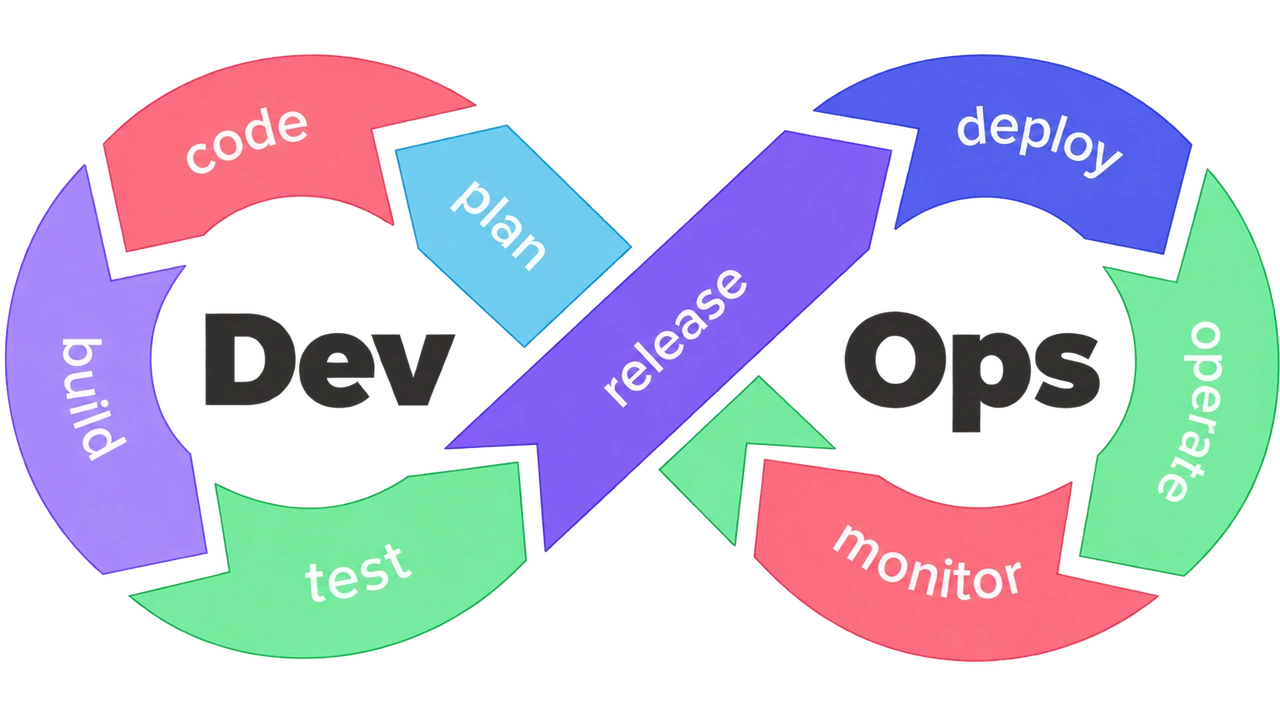
DevOps lifecycle from code and plan through build, test, release, deploy, operate and monitor

Proof

Monitoring, alerting and an on-premise code quality gate

A client needed earlier incident visibility and continuous code inspection without sending infrastructure data or source code outside its environment.

Before

Problems were visible after users felt them

No central infrastructure view, no automatic outage or resource alerts, and no continuous code inspection before deployment.

Inside the client environmentHealthcare technology
Zabbix

CPU, memory, disk, network and service monitoring with custom triggers and routed alerts.

SonarQube

Self-hosted quality and security inspection before code reaches production.

Jenkins

Pipeline execution inside the client's GCP account, alongside the systems it deploys.

Outcome

Issues are detected earlier, operations and management share the same live view, and developers get immediate quality feedback without code leaving the environment.

Open-source tooling stays operational without a licence dependency on AdventSys.

Delivery automation

How we decide what to automate first

Automate the release path where repetition, environment drift, slow feedback or manual controls create the most delivery risk.

Repeatability

Standardise the path to production

Define source, build, tests, artefacts and deployment as one repeatable flow. Automate the stable path first.

Consistency

Keep environments reproducible

Control configuration, infrastructure and secrets so environment differences are intentional, visible and reviewable.

Feedback

Connect releases to operations

Design monitoring, alerts and rollback with the release, then measure improvement with the four DORA metrics.

Control

Keep security inside the pipeline

Build dependency checks, secret handling, approvals, artefact traceability and environment permissions into delivery.

DORA metrics
Deployment frequencyLead timeChange failure rateRecovery time

FAQ

DevOps delivery and operations FAQs

Can DevOps improve our delivery process without replacing the tools we already use?

Usually, yes. The first step is to understand where the current delivery flow is slow, manual or unreliable. Existing source control, CI/CD and cloud tools can often be improved through better pipeline design, automation, environment consistency and ownership before a tool migration is considered.

Why choose AdventSys for DevOps services?

Because we tell you what we run and what we do not. Our stack is Jenkins and Ansible for pipelines, Docker for packaging, Zabbix and Wazuh for monitoring, SonarQube for code quality, and OpenBao for secrets — all open source, all deployable inside your own environment. We have stood that up in a client's own cloud account as well as our own, work with the toolchain you already have, and automate in stages rather than all at once.

What tools do you work with?

Jenkins with Ansible playbooks for continuous integration and deployment, Docker for containerised delivery, Zabbix and Wazuh for infrastructure monitoring and alerting, SonarQube for code quality and security scanning, and OpenBao for secrets management. We also work with Kubernetes, Terraform, Helm, GitHub Actions, GitLab CI, Azure DevOps, Prometheus, Grafana and the ELK stack where they are already part of your platform, and we deploy into client cloud accounts including GCP.

Can you deploy the tooling inside our own infrastructure?

Yes, and for several clients that is the requirement rather than the preference. We have deployed a dedicated SonarQube instance and a Zabbix monitoring setup inside a client's own environment, and run Jenkins inside a client's own cloud account. Where code or infrastructure data cannot leave your boundary, this is the only arrangement that works, and the instances remain yours with no licence dependency on us.

Do you work with teams that already have a pipeline?

Usually, yes — that is the more common engagement. Most teams have something that works and a few steps that do not. We tell you where your current setup is costing you and automate in stages around it rather than replacing a working toolchain.

Do you provide Zabbix implementation and monitoring services?

Yes, and it is the thing we do most of. Zabbix runs across our own server estate and in multiple customer environments. A typical engagement covers installation and sizing, agent rollout across your servers, templates and triggers set against thresholds that reflect how your systems actually behave, alert routing to the people who act on each failure, dashboards for the teams that need them, and tuning afterwards. We run it alongside Wazuh where security and compliance monitoring is needed as well, on your infrastructure or ours.

Do you do security and compliance monitoring as well as infrastructure monitoring?

Yes. Wazuh covers intrusion detection, file integrity monitoring, log analysis and vulnerability detection, with compliance reporting mapped to the frameworks auditors ask about — reporting that has been through client information security review. For a bank, an insurer or a life-sciences company, the monitoring and the evidence it produces are one piece of work, and we build them together.

Can you set up a private container registry and artifact repository?

Yes. An artifact repository stores what your build produces — JARs, npm packages, container images — so every environment deploys the identical artefact rather than a fresh build, and a rollback becomes a redeployment of a known-good version. Where that has to sit inside your own environment, we deploy Harbor for container images, with role-based access control and vulnerability scanning on every image, or Nexus where you need JARs and packages in the same place.

Talk to us about your systems →